
Choose the build
The current design uses Raspberry Pi 5 mounting patterns and twelve MG996R servos. Hardware fit and final actuator load are part of the commissioning work.
Assembly guide · Coming soonKashmir is a printable robot companion in development. Follow the body design, movement previews, and ideas for a platform you can build, code, and make your own. Project releases are coming soon.
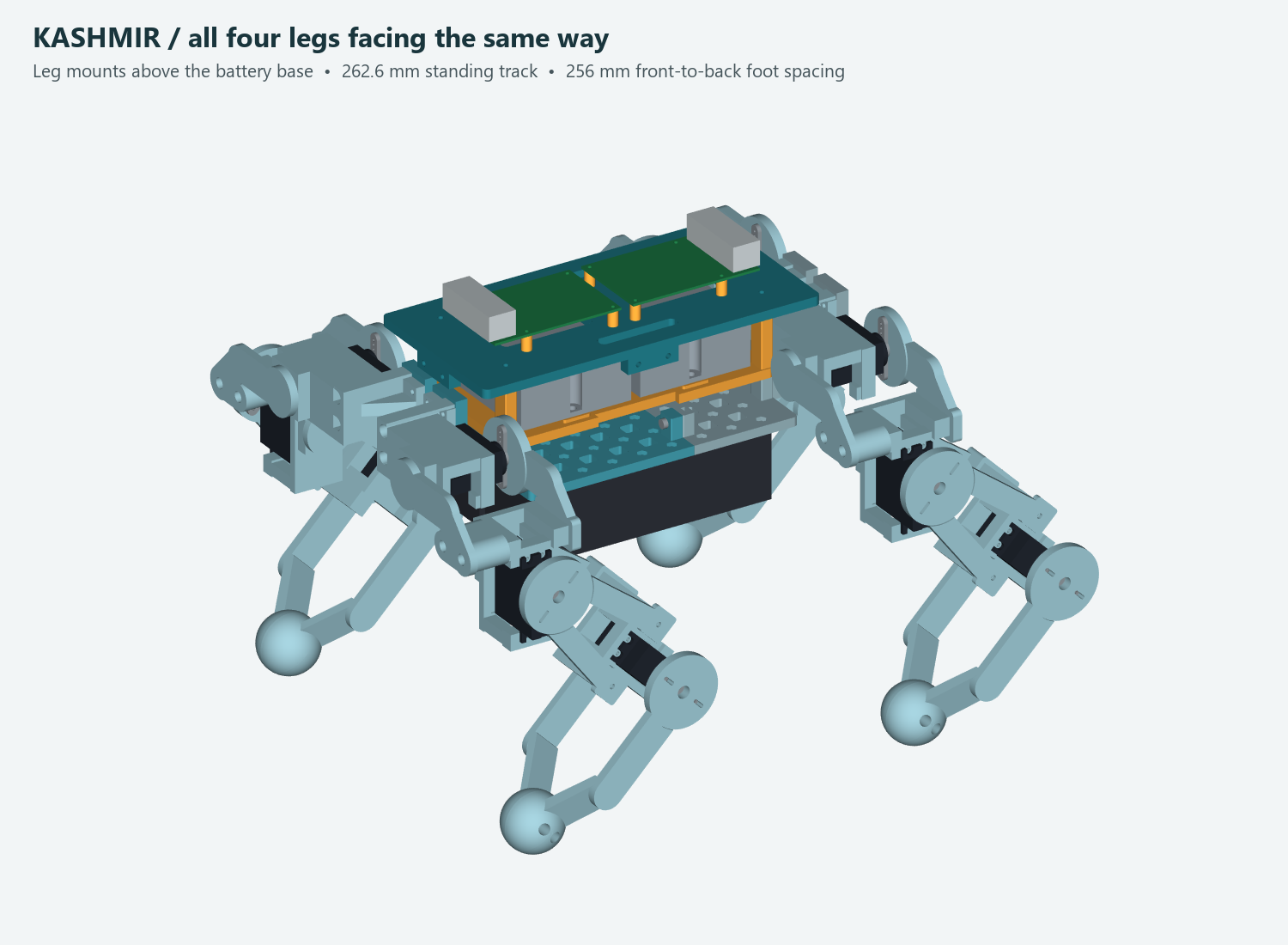
A growing platform, still in development. Full robot commissioning is in progress; outdoor operation and unattended autonomy are future milestones. Downloads will open in a later release.
See the roadmap →Preview the build process, from a printed leg to the software that moves it. Designs and step-by-step guides are being prepared for future access.
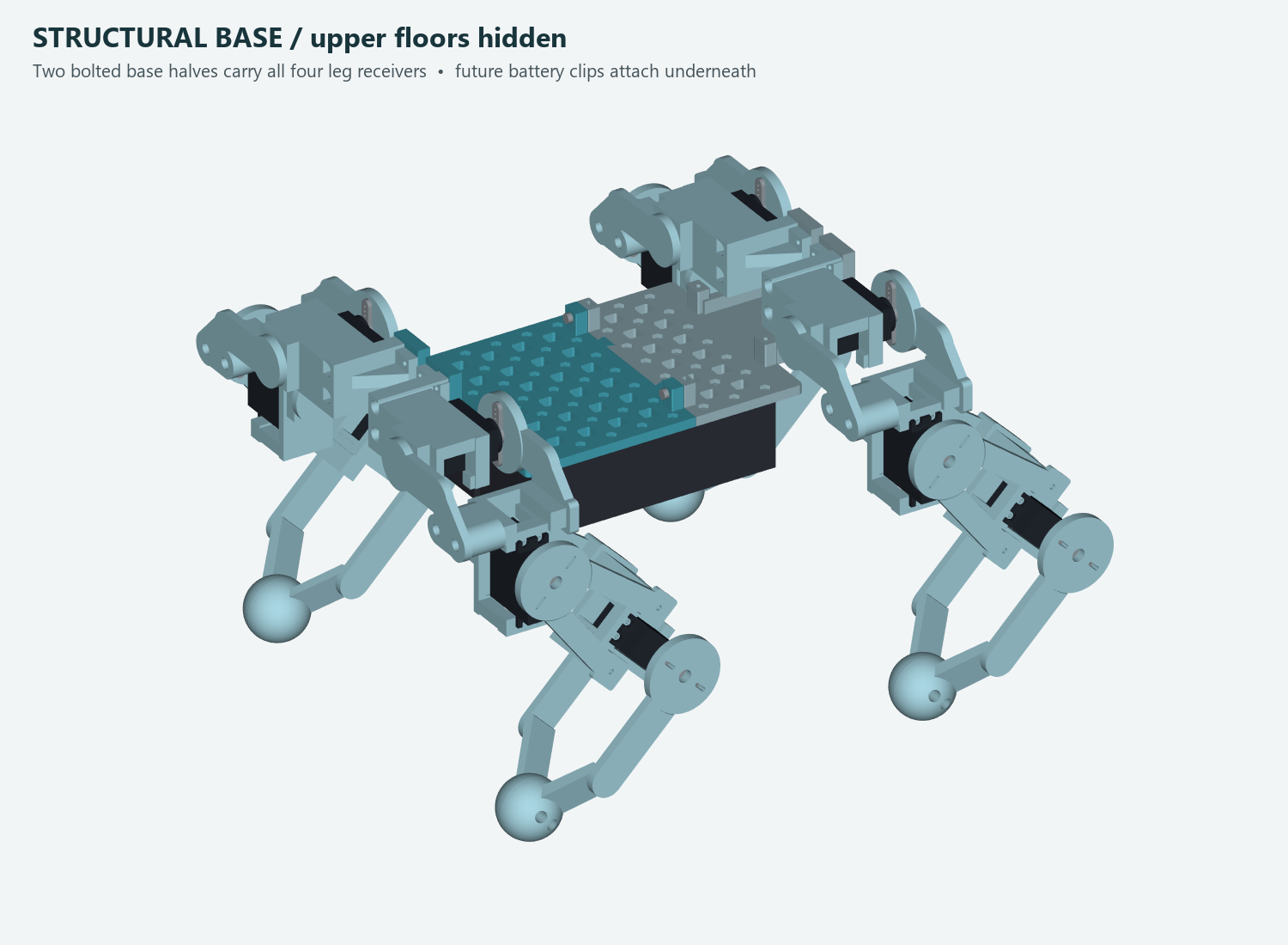
The current design uses Raspberry Pi 5 mounting patterns and twelve MG996R servos. Hardware fit and final actuator load are part of the commissioning work.
Assembly guide · Coming soonThe planned print package will include fit checks, left and right legs, body parts, editable STEP files, and 3MF print plates.
Print package · Coming soonThe Walking preview is designed to help builders understand movement before connecting hardware. Installation and calibration guides will accompany the release.
Explore the software →Preview the planned packages and components. Each entry explains the intended contents and what still needs validation.
Paid file access and subscription options are being considered. Pricing, release terms, and access details will be announced later.
Loading planned releases…
The project files are being prepared for a future release. Downloads and purchases are not available yet.
Start with mechanics and movement. Then explore how sensing and software can work together. Here is a preview of the learning path.
The learning path will start with fit coupons and one root cradle before a complete set of legs. The current design uses two left and two right leg sets, with nine printed pieces per leg.
The planned body package will include P1S-sized print plates and guidance on printer settings, support requirements, and calibrated filament profiles.
Assembly instructions · Coming soonThe Walking application has an offline preview for exploring its interface and commanded leg model before connecting motors. It is built with Python and Tkinter.
The planned guide will cover installation, joint calibration, and supervised commissioning. Live camera, fan, and loaded walking behavior still require hardware verification.
Walking software and guide · Coming soonThe Searching demo explores a marker route through offline simulation. The example follows markers 1 → 2 → 3 without controlling a physical robot.
The planned release will introduce the route interface, camera calibration, and ArUco/ChArUco markers. Physical navigation remains a commissioning milestone.
Searching demo and guide · Coming soonStart with one useful idea: an attachment, a clearer assembly step, or a behavior. Document editable sources, compatibility, dependencies, creator credit, and what you actually tested.
Community submissions and contribution tools are planned for a later release.
Contribution tools · Coming soon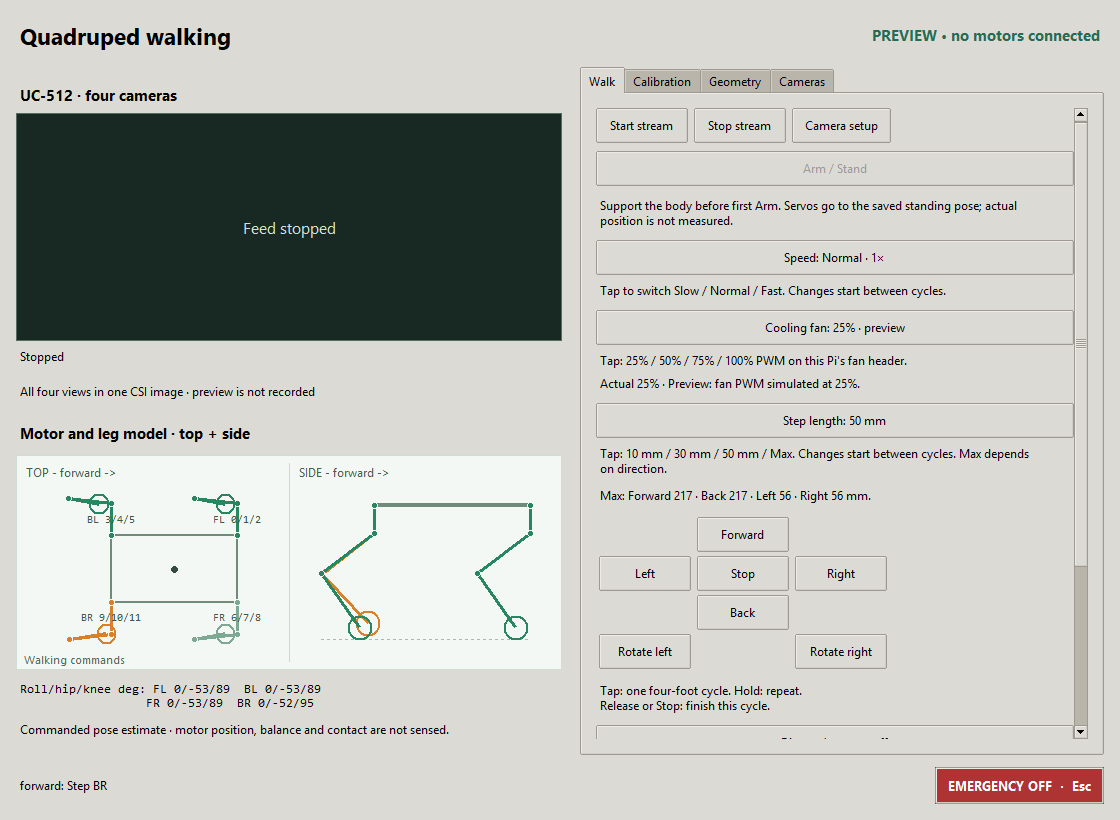
The motor model shows commanded positions. This screen is a preview without connected motors.
The goal is to explore geometry through a printed joint, programming through a simulated gait, and sensing through a marker route. Builder guides and teacher-ready lesson packs are planned additions.
Each release will explain its development stage and what has been demonstrated on the complete robot.
Printable designs, editable sources, Walking software, and an offline Searching demo are being prepared for future access.
Validate final hardware, loaded walking, camera setup, and supervised marker navigation.
Improve the guide with other builders and establish compatibility rules for shared additions.
Investigate interaction, outdoor tasks, and monitoring through defined prototypes.
A new mount. A better gait. A lesson that makes robotics click. The goal is a place where one builder's work can help the next.
Start with sources, compatibility, and a clear account of your testing.
Background: Ring Nebula — James Webb Space Telescope / NIRCam. Credit: ESA/Webb, NASA, CSA, M. Barlow, N. Cox, R. Wesson · CC BY 4.0. Cropped to fit; displayed with a dark overlay.